

In the world of business and finance, navigating the myriad of regulatory requirements can be daunting. One crucial element for businesses operating in the United States is the Employer Identification Number (EIN). But what exactly is an EIN, and why is it so important? Here’s a detailed overview.
What is an EIN?
An Employer Identification Number (EIN) is a unique nine-digit number assigned by the Internal Revenue Service (IRS) to identify a business entity. Often referred to as a Federal Tax Identification Number, the EIN functions much like a Social Security Number for individuals, but for businesses. It is used for a range of purposes, from tax reporting to opening business bank accounts (and credit cards!).

Who Needs an EIN?
Not all businesses require an EIN. Generally, you will need one if you meet any of the following criteria:
- Employers: If your business has employees, you need an EIN to report payroll taxes.
- Business Structure: Corporations and partnerships must have an EIN, regardless of whether they have employees.
- Tax Requirements: Businesses that file certain tax returns, such as excise taxes or alcohol, tobacco, and firearms taxes, need an EIN.
- Bank Accounts: Many banks require an EIN to open a business bank account.
- Certain Business Entities: Sole proprietors who are required to file specific tax returns or who have certain types of employees, such as household employees, may also need an EIN.
How to Apply for an EIN
Applying for an EIN is a straightforward process, and it can be done online through the IRS website, by mail, fax, or telephone. Here’s a step-by-step guide to the online application process:
- Prepare Your Information: Before you start the application, gather necessary information, including the legal name of the business, the type of business entity, and the name and Social Security Number of the principal officer.
- Access the Application: Go to the IRS EIN online application page.
- Complete the Application: Follow the prompts to enter information about your business. The online system will guide you through the necessary fields.
- Submit and Receive Your EIN: Once you complete the application, you will receive your EIN immediately upon submission.
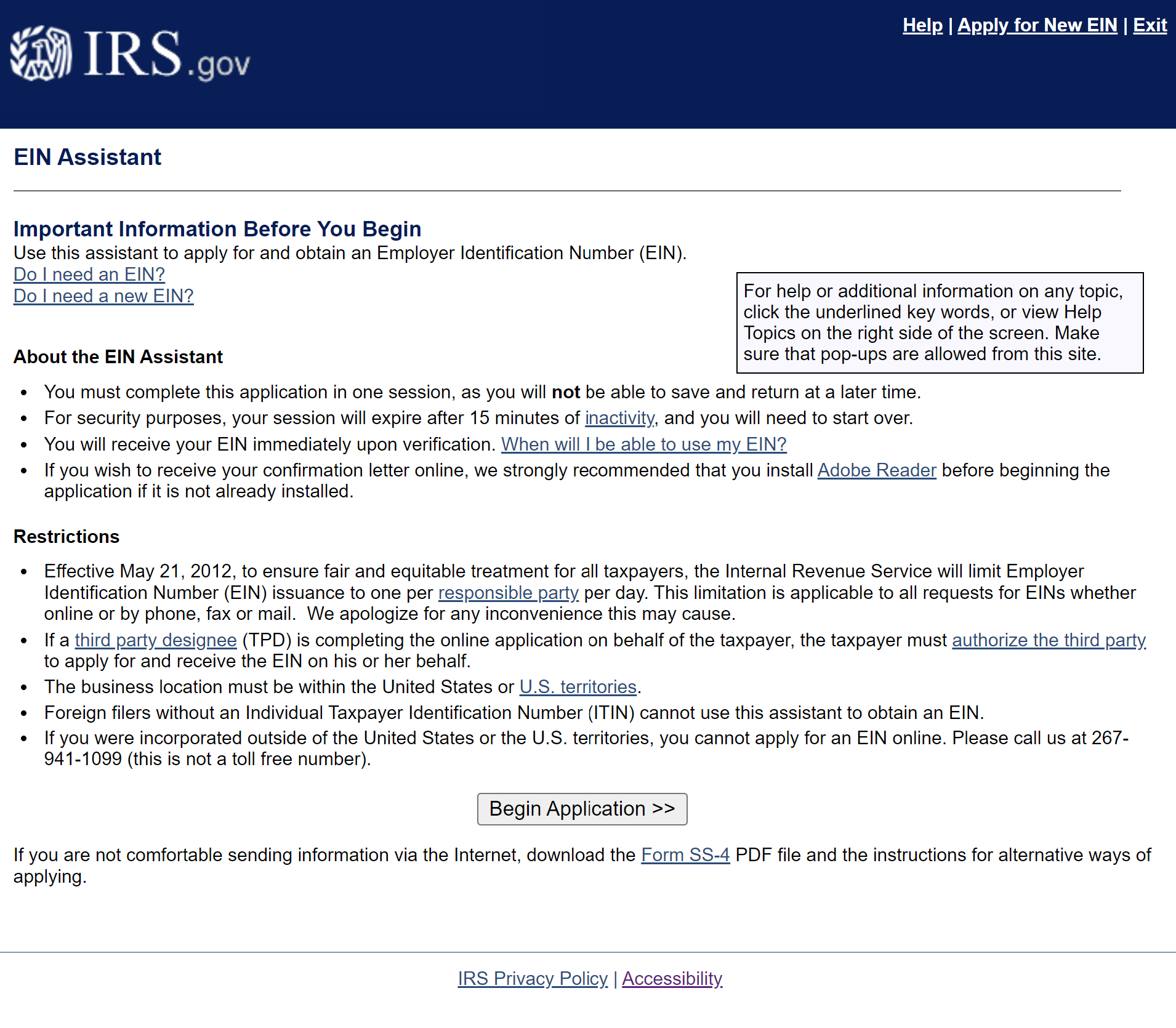
In most cases the online application process should go smoothly. However, I have had instances where I was unable to submit the application online and had to select one of the other methods. I have both submitted by telephone for an EIN, and also via FAX. You can find details including telephone numbers, fax line, and mailing addresses, on the IRS’s How to apply for an EIN page.
Importance of an EIN
An EIN is essential for several reasons:
- Tax Compliance: It is required to file various federal tax returns and reports. Without an EIN, businesses cannot comply with federal tax regulations.
- Business Transactions: An EIN is often needed for transactions such as applying for business licenses and permits, entering into contracts, and securing loans.
- Business Identity: It provides a unique identifier for your business, helping to distinguish it from other entities. This is particularly important for managing business records and communicating with the IRS.
- Employee Payroll: If you employ workers, an EIN is crucial for handling payroll taxes and social security contributions.
EIN vs. Social Security Number (SSN)
While an EIN is used specifically for business purposes, a Social Security Number (SSN) is used to identify individuals for tax and social security purposes. Sole proprietors can use their SSN for their business if they do not have any employees, but an EIN is recommended to separate personal and business finances.
Updating and Changing Your EIN
If you need to update or change your EIN information, such as when your business undergoes a significant change (e.g., changing business structure or name), you may need to apply for a new EIN. The IRS provides guidelines on when and how to make these updates.
Conclusion
An Employer Identification Number (EIN) is a critical component of business operations in the U.S., serving as a unique identifier for tax and legal purposes. Whether you’re starting a new business, hiring employees, or managing business transactions, obtaining and maintaining an EIN ensures compliance with IRS regulations and facilitates smoother business operations. If you’re unsure about your specific EIN requirements or application process, consulting with a tax professional or legal advisor can provide valuable guidance tailored to your situation.
Having an EIN is particularly useful for Chase Ink business credit card applications! 😎